Understanding how UX, UI, and product design work together to create digital experiences that serve users and support business goals.
When a business plans to build a website, mobile application, or digital product, three terms often come into the conversation: UX design, UI design, and product design. They are closely related, frequently used interchangeably, and sometimes treated as different names for the same work.
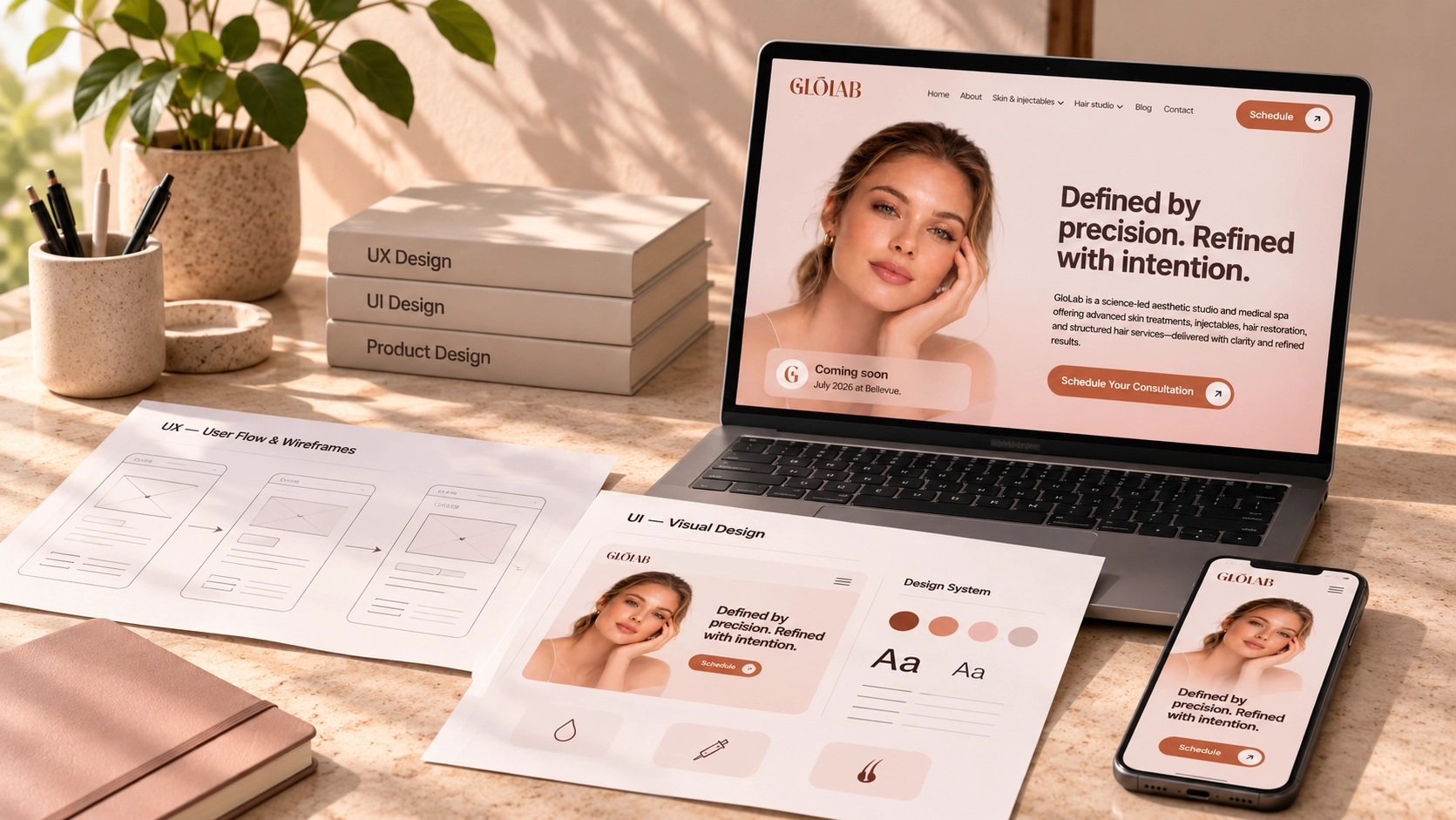
Although these disciplines overlap, each brings a different focus to the design process. UX design considers how people experience and use a product. UI design focuses on the visual and interactive elements that make the experience understandable. Product design connects those decisions to the broader questions of what should be built, who it serves, and why it matters.
Understanding these differences helps businesses plan projects more effectively, identify the right expertise, and make informed decisions before development begins. It also explains why successful digital products require more than attractive screens.
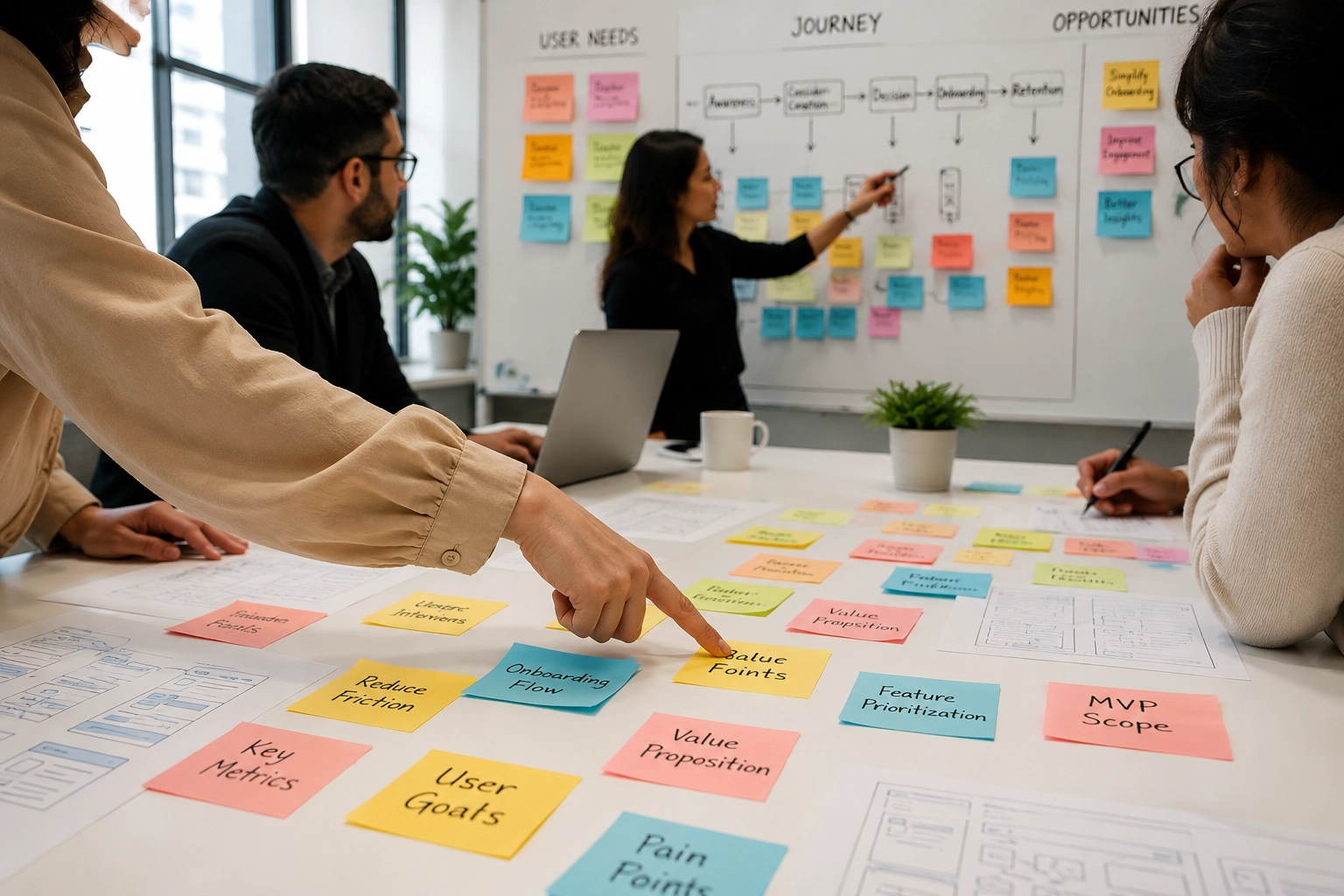
User Experience (UX) design focuses on how people interact with a digital product and how effectively that experience helps them accomplish their goals. It considers the journey users take, the information they need, the decisions they make, and the obstacles they may encounter.
Imagine a customer using an appointment-booking application. They need to find the right service, compare available times, enter their details, and confirm an appointment. UX design examines whether that process feels logical, whether important information is easy to find, and whether unnecessary steps create frustration.
The goal is to create an experience that is useful, accessible, and intuitive. Rather than relying on assumptions about user behavior, UX designers use research, observation, and testing to understand how people actually interact with products.
UX design commonly involves:
These activities help teams identify problems early and make design decisions based on evidence. For businesses, that can mean fewer avoidable changes during development and a clearer understanding of what customers need.
User Interface (UI) design focuses on the visual and interactive elements people use when engaging with a digital product. It includes typography, colors, buttons, menus, icons, forms, spacing, and the overall presentation of information.
Returning to the appointment-booking example, UX design determines how the booking journey should work. UI design shapes how that journey appears on screen. It establishes how available appointments are displayed, how selected options are highlighted, and how users recognize the next action.
Good UI design balances visual expression with usability. The interface should reflect the brand while helping people understand information and interact with the product confidently.
UI design typically covers:
UI design is not simply about making a product attractive. Every visual decision should support understanding or interaction. A beautifully designed interface can still be difficult to use if the navigation is confusing, important actions are unclear, or information is poorly organized.
This is why UI and UX need to work together. Visual design gives form to the experience, while UX helps ensure that experience makes sense.
Product design takes a broader view of the digital experience. It considers what should be built, who it should serve, how it should function, and how it can deliver value to both users and the business.
A product designer may work across research, UX strategy, interface design, prototyping, feature planning, and ongoing improvement. The role often involves collaboration with product managers, developers, researchers, and business stakeholders.
Consider a startup building a platform that connects customers with local service providers. Before designing the interface, the team needs to understand the marketplace, customer expectations, provider requirements, and the most important interactions.
Should users compare providers before creating an account? How should availability be displayed? Which features are essential for the first release? What information helps customers make confident decisions?
Product design connects these questions to a practical product direction. It helps teams determine which problems deserve attention and how the experience should evolve as the business grows.
Depending on the organization and project, product design may involve:
Product design often includes UX and UI responsibilities while connecting them more closely to product strategy, business requirements, and long-term development.
The simplest way to distinguish these disciplines is through the questions they help answer.
UX Design—How should the experience work?
UX design focuses on user needs, navigation, usability, and the steps people take to accomplish their goals. It helps ensure that a digital experience is logical, accessible, and effective.
UI Design—How should the interface communicate?
UI design focuses on the visual presentation and interactive components of the product. It makes information easier to understand and helps users recognize available actions.
Product Design—What should we build, and why?
Product design connects customer problems, product functionality, business objectives, and the overall experience. It helps determine what creates value and how the product should develop.
These distinctions are useful, but they are not rigid boundaries. A UX designer may contribute to interface decisions, a UI designer may identify usability issues, and a product designer may work across both disciplines.
Job titles also vary between organizations. In smaller teams, one designer may handle all three areas, while larger companies may have specialists responsible for different parts of the process.
These disciplines are most effective when they contribute to a shared product direction rather than operate as disconnected activities.
Imagine a business developing a personal finance application. The team first needs to understand the problems customers face, such as tracking expenses, identifying recurring payments, or understanding upcoming financial obligations.
Product design helps determine which problems the application should prioritize and how those decisions support the business model. UX design explores how customers will navigate the application, organize financial information, and complete important tasks. UI design translates that structure into readable dashboards, clear navigation, and consistent interactive components.
The process continues after the first version is released. Customer feedback, usability testing, and product analytics may reveal opportunities to simplify workflows or improve specific features.
This collaboration is not always linear. Product decisions influence UX, usability findings influence UI, and interface testing may reveal problems that require revisiting the original strategy.
A useful product starts with the right problem, takes shape through a clear experience, and becomes understandable through design.
Businesses sometimes evaluate digital design primarily through appearance. A redesigned website looks more modern, an application feels more polished, or a dashboard has a more refined visual system.
While those improvements have value, they do not necessarily address the problems affecting customer behavior.
If visitors struggle to find services, complete an inquiry form, understand pricing, or navigate checkout, the experience creates friction. Some customers may abandon the task, contact support, or choose another provider.
UX design helps identify and reduce those barriers by improving the structure and usability of the experience. UI design supports that work by making information readable, actions recognizable, and interactions consistent.
Together, they can contribute to outcomes such as:
These outcomes should be evaluated through research and relevant performance metrics rather than assumed from a visual redesign alone.
For businesses, the value of UX and UI design lies in helping customers accomplish what they came to do while supporting the objectives of the product or website.
For startups, one of the most difficult decisions is determining what to build first. An idea may begin with a long list of features, but not every feature contributes equally to solving the customer's problem.
Product design helps teams examine assumptions, understand user needs, and prioritize functionality before committing significant resources to development.
This becomes particularly important when planning a Minimum Viable Product (MVP). An MVP should provide enough functionality to test a meaningful product idea without attempting to deliver every possible feature in the first release.
For established businesses, product design supports a different challenge. As products expand, additional features, audiences, and technical requirements can make the experience more complicated. A connected product design process helps maintain consistency and usability while accommodating growth.
In both situations, the goal is to make informed product decisions rather than allowing the feature list to determine the direction.
Every website benefits from UX and UI thinking, but not every project requires a dedicated product design process.
A small informational website may primarily need clear content, intuitive navigation, responsive layouts, accessible interactions, and a consistent visual identity. These requirements involve UX and UI, even when the website itself is relatively straightforward.
A more complex digital platform may require deeper product planning. Websites with user accounts, personalized dashboards, booking systems, payments, or customer portals introduce decisions that extend beyond page layouts.
A marketing website designed to explain services and generate leads has different requirements from a web application built around recurring user tasks. Understanding that distinction helps businesses define the right scope and avoid unnecessary complexity.
The objective is not to involve every possible design discipline. It is to apply the right expertise to the problems the project needs to solve.
One common mistake is beginning with visual references before defining the problem. A business may collect examples of websites or applications it likes, but those references do not necessarily explain what its own customers need.
Another mistake is treating UX as an optional step after interface design. When important user journeys are not considered early, teams may discover navigation problems, confusing workflows, or missing functionality during development.
Businesses may also assume that adding more features automatically improves a product. In practice, unnecessary functionality can make an experience harder to understand and maintain.
A better approach begins with a clear business objective, an understanding of the audience, and agreement on the most important tasks users need to complete. Research and experience planning can then guide interface design and development.
This creates a stronger foundation for decisions throughout the project.
At Thinkstroke, we approach digital experiences by connecting user needs with business intent. Before deciding how an interface should look, we work to understand what people need to accomplish and what the product must deliver.
That thinking informs UX research, experience strategy, information architecture, user flows, wireframes, interface design, and interactive prototypes. For product-focused projects, it also helps shape MVP scope, feature priorities, and the design systems needed for future growth.
We see UX, UI, and product design as connected responsibilities rather than isolated deliverables. Research gives direction to the experience, interface design makes that experience understandable, and product thinking helps ensure the work remains relevant to the larger business objective.
The goal is not to introduce more design activity. It is to make better decisions before those decisions become expensive to change.
UX design focuses on how people experience and use a digital product, including navigation, user journeys, usability, and task completion. UI design focuses on the visual and interactive elements through which people use that product, including buttons, typography, colors, forms, and layouts. Both disciplines work together to create effective digital experiences.
Not exactly. UX design primarily focuses on user needs and the quality of the experience. Product design often includes UX and UI while considering broader questions about product strategy, functionality, business goals, feature priorities, and ongoing improvement. Responsibilities vary between organizations.
It depends on the project's needs and the team's existing capabilities. A startup developing a new digital product may benefit from product design expertise that connects discovery, UX, UI, and MVP planning. A company improving an established user journey may need more specialized UX research or design support.
Yes. Many designers work across all three disciplines, particularly in startups and smaller teams. However, complex products may benefit from specialists in user research, UX strategy, interface design, accessibility, or product design. The required expertise should reflect the complexity of the work.
UX activities such as research, journey mapping, information architecture, and wireframing often begin before detailed UI design. However, the process is iterative. Interface exploration and usability testing can reveal insights that lead teams to revisit earlier UX decisions.
UX, UI, and product design each contribute something important to a digital experience. UX helps people accomplish their goals, UI makes interactions understandable, and product design connects those experiences to a larger purpose.
For businesses planning a website, mobile application, or digital platform, understanding these differences helps establish realistic expectations and a more effective design process. The focus should not be on selecting a job title or producing polished screens as quickly as possible. It should be on understanding the problem, defining the right experience, and building something that delivers meaningful value.
When research, experience design, interface design, and product strategy work together, the result is more than a visually refined product. It is a digital experience built around what people need and what the business is trying to achieve.
Understand the problem. Design the experience. Build with purpose.


22525 SE 64th Pl Suite 2345
Issaquah Washington