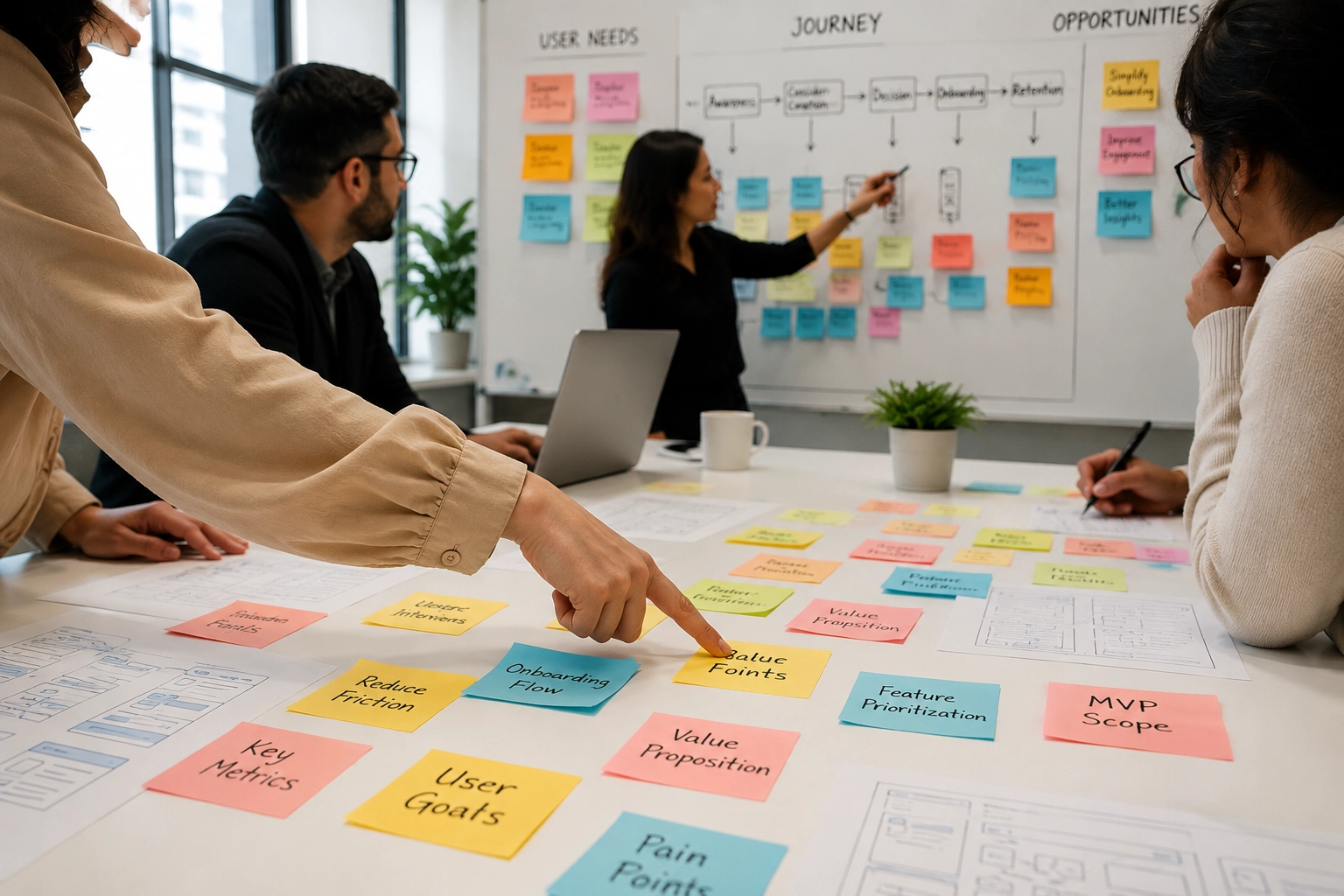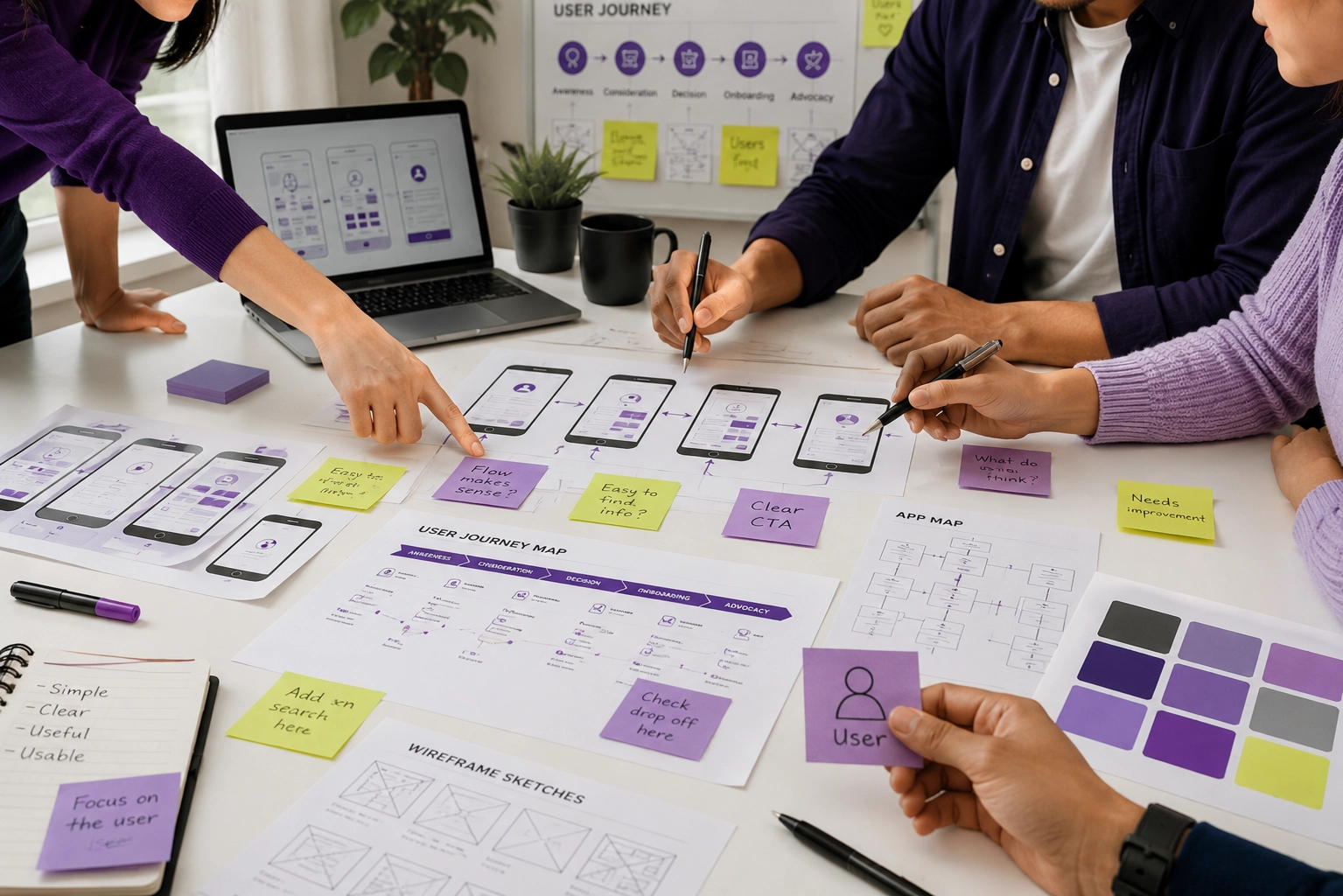
Building a product involves hundreds of decisions. Some move the experience forward. Others create friction, confusion, or unnecessary complexity. The challenge is knowing the difference before development begins.
Prototype testing helps teams validate decisions early. Instead of relying on assumptions or internal opinions, businesses can observe how real users interact with an experience before investing significant time and resources into development.
For Seattle startups and growing businesses, prototype testing is one of the most effective ways to reduce risk, improve usability, and create products that align with customer expectations.
Many products are built around assumptions.
Teams often believe they understand what customers want, how they behave, and what actions they will take. Sometimes those assumptions are correct. Often they are only partially correct.
Prototype testing creates an opportunity to replace assumptions with evidence. By observing real users complete real tasks, businesses can identify usability issues, validate product concepts, and uncover opportunities for improvement before launch.
This process helps answer important questions:
Small discoveries made during testing often prevent expensive redesigns later.
Before recruiting participants, define what success looks like.
A prototype test should answer specific questions rather than collect general opinions. Clear objectives create better discussions, more useful observations, and stronger outcomes.
Examples include:
Testing without a purpose often generates opinions.
Testing with a purpose generates insight.
The quality of your testing depends on the quality of your participants.
The goal is not to gather feedback from as many people as possible. The goal is to learn from people who closely represent your target audience.
Seattle's market includes a diverse mix of technology professionals, healthcare consumers, entrepreneurs, students, remote workers, and enterprise decision-makers. Depending on your product, different groups will provide different perspectives.
Focus on users who are most likely to engage with your product in real-world situations.
In many cases, five to eight participants can reveal the majority of usability issues.
One of the most common mistakes during prototype testing is asking users whether they like a design.
A better approach is asking users to complete realistic tasks.
Instead of asking:
"Do you like this screen?"
Ask:
"How would you schedule an appointment?"
Or:
"Show me how you would create a new account."
Task-based testing reveals actual behavior rather than personal preference. Customers often tell us what they think they would do. Testing helps us understand what they actually do.
That difference matters.
Prototype testing is not a presentation.
It is an opportunity to learn.
Allow participants to think aloud as they move through tasks. Encourage them to explain their decisions, frustrations, and expectations while interacting with the prototype.
Pay close attention to:
The most valuable insights often appear during moments of uncertainty. Sometimes a few seconds of hesitation reveal more than several minutes of discussion.
Not every comment requires action.
Prototype testing becomes valuable when patterns begin to emerge across multiple participants.
If one person struggles with a task, it may be an isolated issue. If several people encounter the same challenge, there is a strong possibility that the design needs improvement.
Look for recurring observations such as:
Patterns help teams prioritize improvements based on evidence rather than personal preference.
Many organizations wait until a product feels complete before conducting usability testing.
Unfortunately, this is often the most expensive time to learn.
Prototype testing is most effective when it begins early and continues throughout the design process. Even low-fidelity wireframes can uncover important usability concerns before development starts.
The earlier a problem is identified, the easier and less expensive it becomes to solve.
Testing is not a final checkpoint.
It is an ongoing learning process.
Testing only creates value when findings lead to action.
After each testing session, organize observations into clear categories:
Prioritize changes based on customer impact rather than internal preference. When decisions are supported by evidence, teams spend less time debating and more time improving the experience.
The goal is not to collect feedback.
The goal is to create clarity.
At Thinkstroke, we believe prototype testing should create confidence before development begins.
Our process combines user research, usability testing, journey mapping, and behavioral analysis to help businesses understand how customers interact with digital experiences before they are built.
Rather than asking users whether they like a design, we focus on understanding how they use it. This approach helps teams uncover friction, validate assumptions, and make decisions based on evidence.
Because successful products are rarely built from assumptions.
They are built from understanding.
Prototype testing is the process of evaluating a product concept or interface with real users before development. It helps teams identify usability issues, validate ideas, and improve the customer experience early in the design process.
In many cases, five to eight participants can uncover the majority of usability issues. The exact number depends on the complexity of the product and the diversity of the target audience.
Testing prototypes before development helps reduce risk, improve usability, and prevent costly changes later. It allows teams to make informed decisions before investing significant resources.
Businesses should focus on key customer tasks such as onboarding, navigation, account creation, booking flows, checkout experiences, and any action that directly impacts customer success.
Prototype testing evaluates concepts before development begins. Usability testing can be performed on both prototypes and live products to identify areas where users experience difficulty.
The most successful products are not always the ones with the most features. They are often the ones that make decisions easier for customers.
Prototype testing helps businesses replace assumptions with evidence. It creates confidence before development begins and helps teams focus on what matters most to the people using their product.
Design does not improve because it is reviewed.
It improves because it is understood.
And understanding begins with real users.


22525 SE 64th Pl Suite 2345
Issaquah Washington