At Thinkstroke, we work closely with startups navigating early decisions that shape long-term growth. Brand identity is often one of them—and rarely the simplest.
We help startups bring clarity to what they’re building, who it’s for, and how it should show up in the world. From brand identity and visual systems to messaging, websites, and marketing strategy, our work is focused on helping startups move with intent—not noise.
Whether it’s defining a strong brand foundation, building visibility through thoughtful marketing, or aligning design with growth goals, we partner with startups to turn ideas into identities that hold as the business scales.
Design doesn’t convince. It clarifies until the decision is effortless.
Seattle feels like a city of makers. Thoughtful. Design-aware. Purpose-driven.
For Seattle startups, brand identity isn’t about following a trend or choosing the right shade of blue. It’s about deciding how you want to be understood—before your audience finishes forming an opinion.
A strong brand identity for Seattle startups helps you stand out, build trust, and sustain momentum. Especially when customers, investors, and partners are all paying attention at once.
Every startup brand begins before design. It begins with intent.
Ask yourself:
This clarity becomes the foundation of your startup brand strategy. It guides decisions. It signals seriousness. And it keeps the brand steady as the company grows.
In Seattle’s startup ecosystem, that kind of purpose is noticed.
Effective branding for startups isn’t broad. It’s precise.
Before you design anything, understand:
When you get this right, your brand doesn’t try to persuade. It feels relevant.
That relevance is what turns early attention into trust.
Once your foundation is clear, your visual language should do the quiet work.
Your visual brand identity includes:
These elements aren’t decoration. They are commitments. When used consistently, they make your brand easier to recognize and easier to remember.
Seattle startups tend to value restraint and clarity. Your design should reflect that—not compete with it.
Brand voice isn’t personality. It’s discipline.
It shows up in:
Decide early whether your voice is direct, warm, or confident—then stay consistent. This consistency strengthens brand awareness for startups long, long before campaigns or media spending enter the picture.
A brand is only as strong as how consistently it’s experienced.
That means:
For Seattle-based startups, consistency is often what separates credible brands from forgettable ones. It also quietly supports SEO for startups, making your messaging easier to recognize, search, and trust over time.
Storytelling isn’t about saying more. It’s about saying the right thing.
Your brand story should answer:
When startups share honest stories of progress and intent, they earn attention without asking for it.
As your startup grows, clarity needs structure.
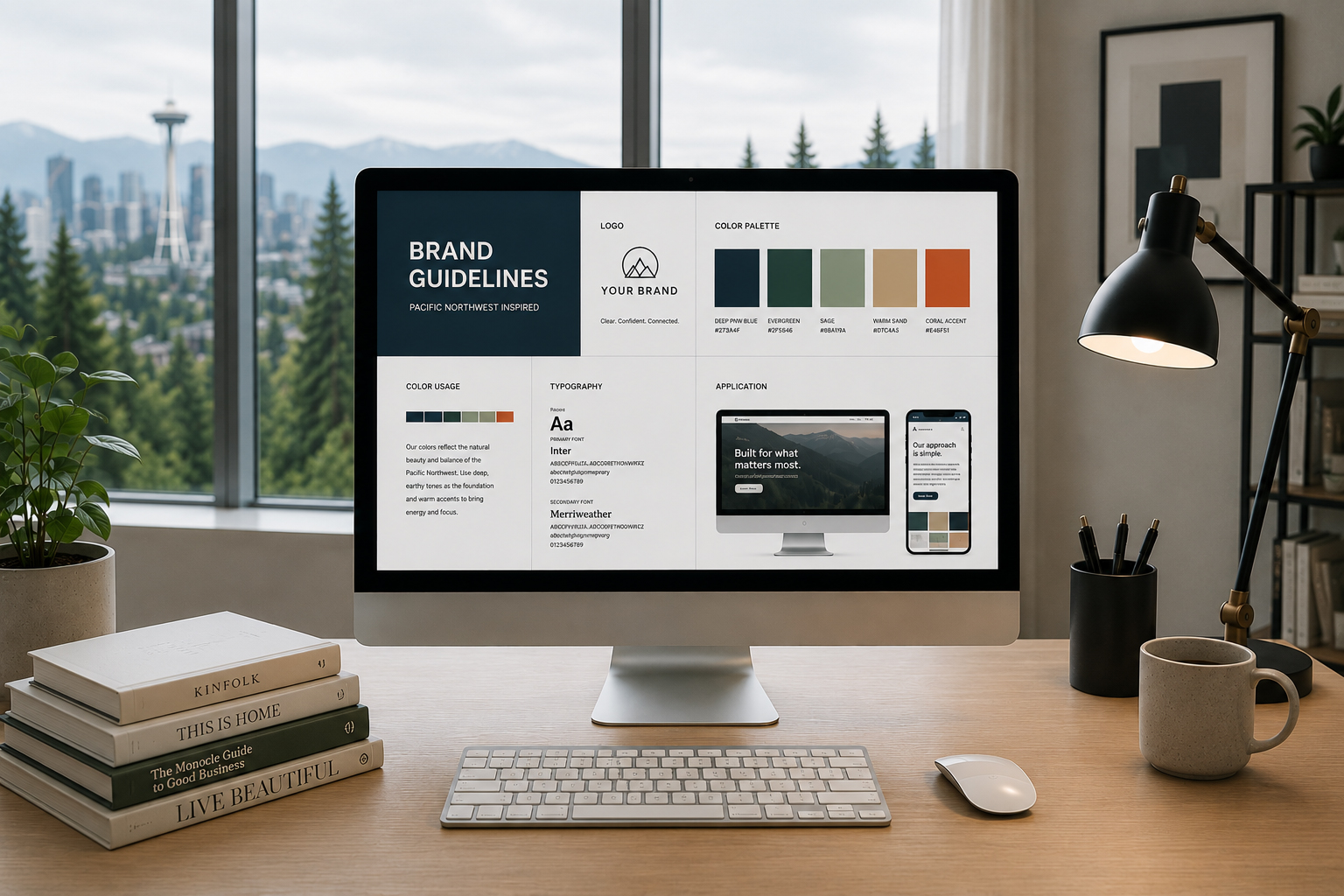
Brand guidelines act as a single source of truth. They keep your brand identity system intact as more people begin creating on your behalf.
Include
This isn’t bureaucracy. It’s alignment that survives growth.
Brand identity isn’t static. Markets shift. Customers evolve.
What matters is staying anchored. Refining without drifting. Removing what no longer earns its place.
That’s how brands mature without losing meaning.
For Seattle startups, building a strong brand identity isn’t a future task. It’s a strategic decision that shapes perception, differentiation, and long-term growth.
Move with intent.
Design with purpose.
Speak with clarity.
When those align, a startup brand stops competing for attention—and becomes the obvious choice.


22525 SE 64th Pl Suite 2345
Issaquah Washington